ABOUT JUDIT

THIS STORY BEGAN IN HUNGARY.
I grew up in Hungary, where being slim was never treated as a particularly casual matter. There was enormous pressure on women to stay slim, feminine and put-together — and, growing up, I absorbed the message that gaining weight was something to be avoided almost at any cost.
So I learned how to diet. Very, very well.
I knew how to restrict. I knew how to count. I knew how to cut things out, be “good”, lose weight — and eventually start all over again.
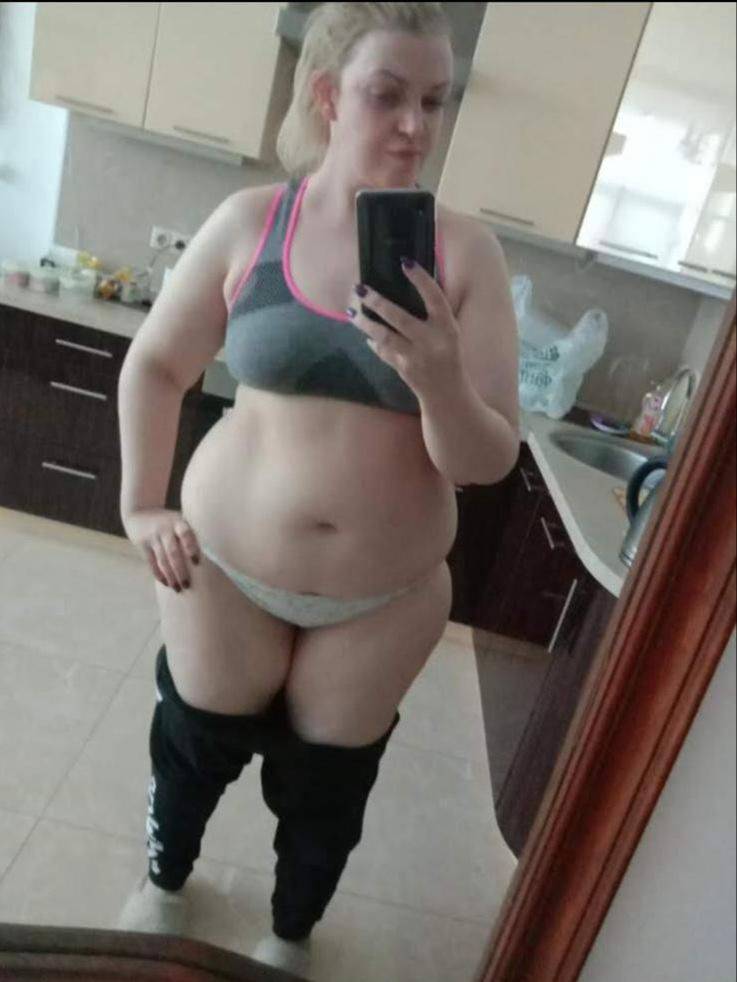
The irony is that the harder I tried to control my weight, the more weight I eventually gained.
And eventually, this was me. →
THEN I FOUND SOMETHING DIFFERENT.
I found Norbi Update.
Norbi Update was created in Hungary by Norbert Schobert, a Hungarian fitness trainer and entrepreneur. He introduced the Update system in 2004, and it went on to become enormously well known in Hungary. There were books, branded foods and, eventually, Update shops across the country. It wasn't a niche diet that only a handful of people had heard about; for a period of time, Norbi and Update seemed to be everywhere.
And I became one of the people following it.
What was extraordinary for me was how simple the basic standard was — and how radically different that felt after years of dieting.
For the first time in my life, I could eat.
I don't mean that figuratively. Until then, losing weight had always meant some version of eating less, restricting more, counting, being hungry and trying very hard to be “good”.
Update gave me a different structure. Food was classified, and timing mattered. Instead of thinking only about how much I was allowed to eat, I began paying attention to what I was eating and when I was eating it.
And I followed it.
I ate. I lived my life.
And I lost 40 kilos — 88 pounds.
But the part of the story that matters most to me now is that I didn't reach my goal weight and immediately go searching for the next diet.
I kept eating this way.
Nearly ten years later, I still do.
FOR YEARS, I KEPT THE “BEFORE” PRIVATE.
After I lost the weight, I did something that probably sounds strange now: I barely told anyone I had ever been overweight.
I didn’t want to be introduced as someone who had “lost a lot of weight”. I didn’t want the old photographs circulating. I didn’t want my previous body to become part of the way people saw me.
I wanted to be the woman who was slim — not the woman who had become slim.
So, for years, I protected that identity fiercely. The woman in that photograph belonged to a previous life, and I had no desire to bring her with me into the new one.
It took me years to understand that there was a difference between going backwards and looking backwards.
Showing that photograph now doesn’t threaten the woman I became. It explains her.
I STARTED NOTICING WHAT CHANGED WHEN THE COUNTRY CHANGED.
My life eventually took me far beyond Hungary. I have taught in five different countries, and living abroad gave me an unusual opportunity to observe something most of us rarely think about: how much of the way we eat is simply the culture around us.
What counts as breakfast. What people snack on. What sits on an ordinary supermarket shelf. What is considered a normal portion. What people eat without thinking twice about it.
Move countries, and those things change.
I noticed because I had already spent years paying attention to food. I wasn't looking at it as a nutritionist. I was looking at it as a teacher — and as someone who had once been 40 kilos heavier.
America made some of those differences particularly difficult to miss. Refined sugar seemed to appear in places where I would never have expected it — breads, sauces, dressings, drinks, snacks and everyday foods that didn't necessarily even taste particularly sweet.
And I became increasingly interested in the gap between what we think we're choosing and what we're actually eating.
The longer I lived outside Hungary, the more I realised that the principles I had learned years earlier had become something I was constantly translating, adapting and applying to real life.
THE SIMPLE PART IS WHY I NEVER STOPPED.
I didn't lose 88 pounds and then graduate from this way of eating. Nearly ten years later, I still eat this way.
That is rather significant considering my previous relationship with diets. They always had a beginning, an end — and eventually another beginning.
This didn't. The basic standard was simple enough to become part of my life: understand what I'm eating and when it belongs in my day. No calorie arithmetic. No elaborate meal plans. No perpetual search for the next diet.
I was in my thirties when I lost the weight. I'm 45 now. My body has changed. My hormones have changed. Life has changed. And yet I haven't needed to reinvent the way I eat every few years. The same basic system has remained remarkably easy to live with.
I've refined other things along the way. One of them was deciding to stop eating added refined sugar.
And I should probably disclose that I am a vain woman.
I care about my figure. I care about my hair. I care about my skin. And when I stopped eating added refined sugar, I noticed a positive difference in my skin too. I liked what I saw in the mirror. Vanity, occasionally, has its uses. :)
Perhaps the biggest difference is that I no longer think of this as something I'm “on”.
This is simply how I eat.
LOSING THE WEIGHT WAS ONLY THE FIRST THING THAT CHANGED.
Little did I know when I started that losing 40 kilos would be only one part of a much larger transformation.
At first, of course, I thought it was about my body.
And my body did change.
But then something else began to happen.
The way I saw myself changed. The way I presented myself changed. My confidence changed. My standards changed. The things I was willing to accept — from myself, from other people and from my life — began to change too.
My body changed first. Then my standards did.
For years, I had thought becoming slim would be the destination. Instead, it gave me a strange new question:
Now that I had become the woman I had wanted to look like, who did I want to become?
That question has followed me far beyond food.
I became fascinated by identity — by the stories we carry about ourselves, the standards we live by, the confidence with which we move through the world, and what happens when the person we have been no longer matches the person we are becoming.
I don't believe changing your body automatically fixes your life. Mine certainly didn't transform overnight.
But for me, losing the weight became evidence of something much larger:
I could change something I had once believed I would struggle with forever.
And once I knew that, I began looking at other parts of my life differently too.
That journey is still continuing.
AND THIS IS ME NOW.
I'm 45 now. I teach, I build things, I ask far too many questions, I have very definite standards, and I still eat according to the same basic principles that changed my relationship with food nearly ten years ago.
I'm not a nutritionist, and I have no interest in pretending to be one. I'm a teacher. That is the skill I bring to this.
I know what it is like to spend years starting again. I also know what it feels like when, eventually, you don't.
The woman in that photograph at the beginning of this page could never have imagined the life I have now.
I'm rather glad she kept going.